When growing mushrooms, Trichoderma is a contaminant, not something you want in your mushroom grow. It competes aggressively with mushroom mycelium and can quickly take over your substrate.
Here’s what to do if you encounter it:
🔍 How to Identify Trichoderma
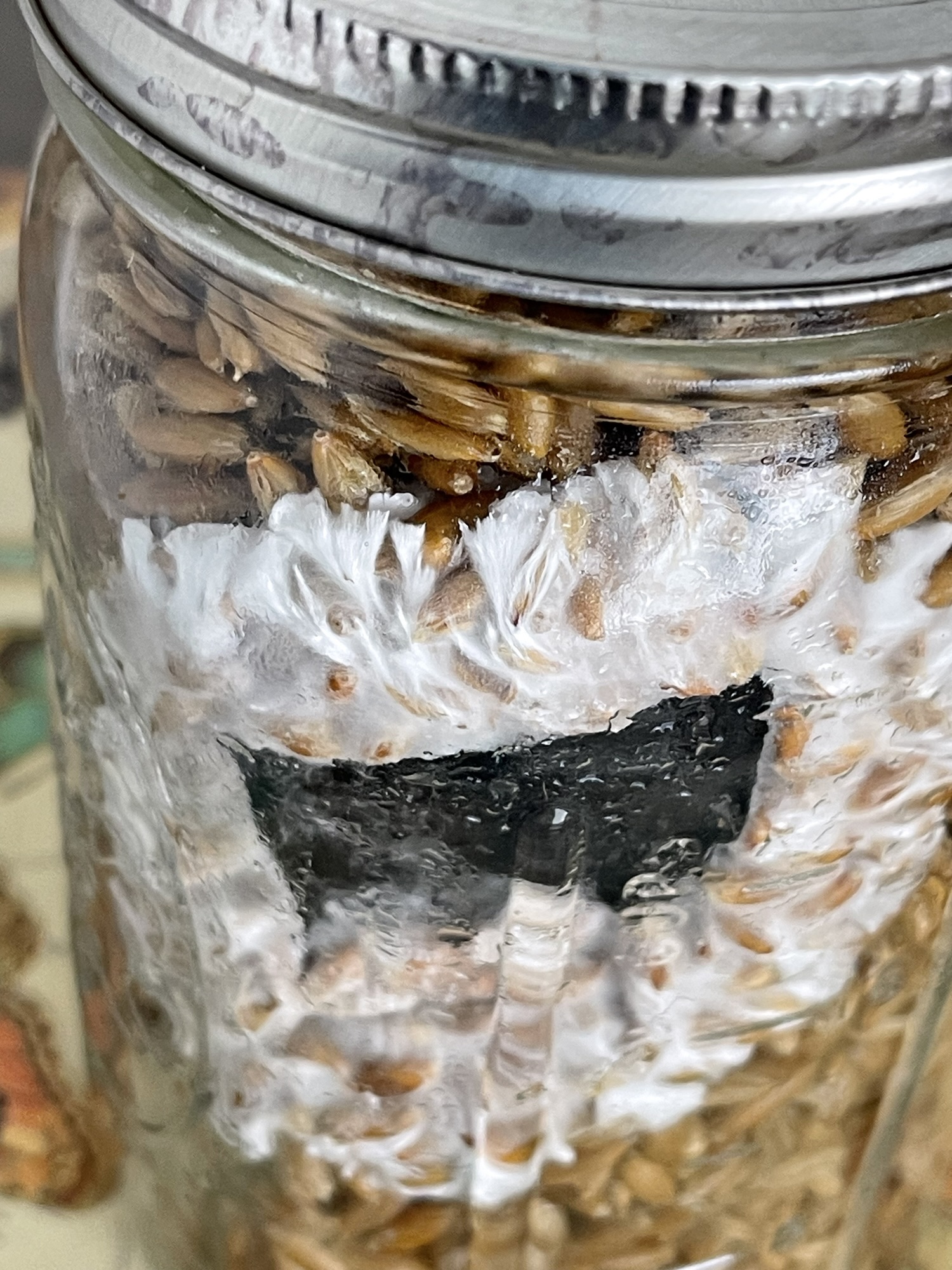
- Starts as bright white fluffy growth
- Quickly turns green (powdery/sporulating)
- Spreads fast across substrate
- Often has a musty or sharp smell
It can look similar to mushroom mycelium at first, but the green color is the giveaway.
🚨 If You See Trichoderma in Your Grow
1️⃣ Isolate Immediately
Move the contaminated grow away from other tubs/bags to prevent spores spreading.
2️⃣ Do NOT Try to Save It (Usually)
Once it turns green, it’s already sporulating. Spraying or cutting it out rarely works long-term.
For small early patches (still white):
- Some growers try cutting out a large section around it.
- Others apply 3% hydrogen peroxide.
But success is uncommon once established.
3️⃣ Safely Dispose
- Seal the tub/bag in a plastic bag.
- Remove it from your grow area.
- Dispose outside.
- Clean the area thoroughly.
🧼 Clean & Reset Your Grow Area
Trichoderma spreads via airborne spores, so sanitation is critical:
- Wipe surfaces with 10% bleach solution
- Clean tools with 70% isopropyl alcohol
- Wash hands and change clothes
- Improve airflow control
- Avoid opening contaminated tubs indoors
🛡️ Preventing Trichoderma Next Time
✔ Proper Pasteurization / Sterilization
- Bulk substrates → Proper pasteurization (140–170°F / 60–77°C)
- Grain spawn → Full sterilization (pressure cooker 15 PSI, 90–120 mins)
✔ Use Clean Spawn
Contaminated grain spawn is the #1 cause of trich outbreaks.
✔ Lower Humidity in Incubation Area
High humidity + stagnant air = trich paradise.
✔ Work Clean
- Use a Still Air Box (SAB) or flow hood
- Flame sterilize tools
- Minimize exposure time
🌱 Important Note
Some commercial agriculture uses Trichoderma as a beneficial fungus for plants — but in mushroom cultivation, it’s your enemy.