In the world of mushroom cultivation, a casing layer is essentially a “micro-climate” blanket. It is a layer of moist, non-nutritive material (usually a mix of peat moss and vermiculite) applied over the top of a fully colonized substrate.
Whether you need one depends entirely on the species you are growing and your specific environment.
🛠️ Why Use a Casing Layer?
The casing layer serves three primary functions:
* Moisture Reservoir: It prevents the colonized substrate from drying out during the pinning process.
* Pinning Trigger: It creates a humid transition zone that encourages “primordia” (baby mushrooms) to form.
* Surface Protection: It protects the delicate mycelium from direct contact with air, which can sometimes cause it to “bruise” or stall.
🍄 When is it NECESSARY?
Some mushrooms are picky and will struggle to fruit (or won’t fruit at all) without that extra layer of humidity.
* Agaricus bisporus (Button/Portobello): These require a casing layer to fruit properly. Without it, you’ll likely get nothing.
* King Stropharia (Wine Cap): These almost always need a casing (or soil contact) to trigger fruiting.
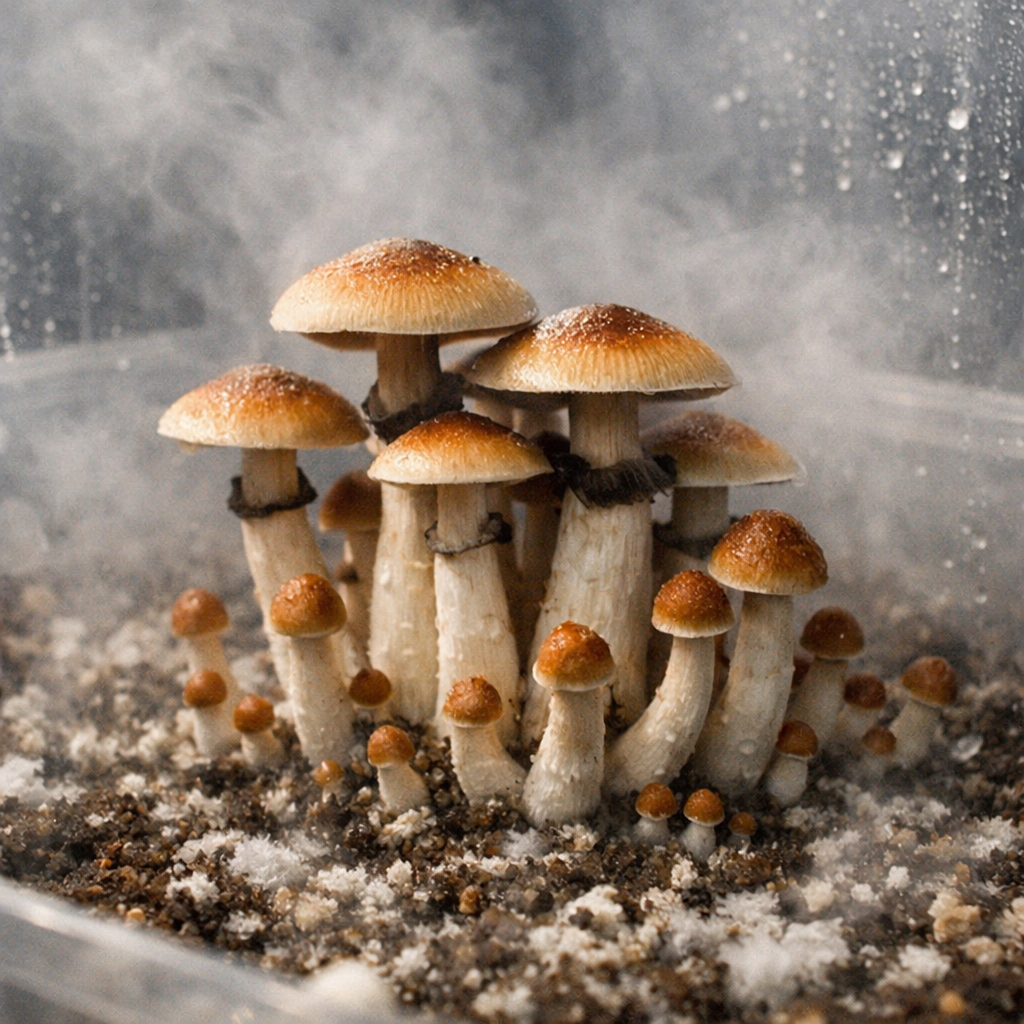
* Pan-Cyans (Panaeolus cyanescens): These are very sensitive to evaporation and generally require a thin, pasteurized casing layer.
❓ When is it OPTIONAL?
For the most popular home-grown species, like Oysters or many tropical varieties grown in tubs, a casing layer is usually considered optional.
🕒 When to Apply It
Timing is everything. You have two main schools of thought:
* At Spawn to Bulk: Some growers apply a “pseudo-casing” (just a thin layer of the same substrate) immediately when mixing grain with soil.
* After Full Colonization: The traditional way is to wait until your tub is 100% white with mycelium. You then apply a pasteurized (not sterilized) casing layer about 0.5 to 1 inch thick.
🚨 Crucial Tip: A true casing layer should be non-nutritive. If you use something with food in it (like grain or manure), the mycelium will just eat it and “colonize” the top, defeating the purpose of the humidity buffer.>
🧪 Quick “Recipe” for a Casing LayerIf you decide to go for it, the “50/50” mix is the gold standard: * 50% Peat Moss * 50% Vermiculite * A small amount of hydrated lime (to raise the pH to around 8.0, which helps prevent green mold/Trichoderma).